Key takeaways
- Nvidia reported $115.8 billion of quarterly revenue on November 17; TSMC reported October sales growth of 59.7% earlier in the month.
- Five useful supply-chain categories are lithography, fabrication, merchant compute, custom silicon and networking, and high-bandwidth memory.
- These categories contain six companies discussed here; they are neither an exhaustive supplier list nor five equivalent monopolies.
The AI infrastructure opportunity is broader than choosing the winning model developer. As of November 21, 2026, recent supplier results show substantial demand for the physical equipment behind training and inference. The investment question is which suppliers can turn that demand into durable cash flow at a price that leaves room for disappointment.
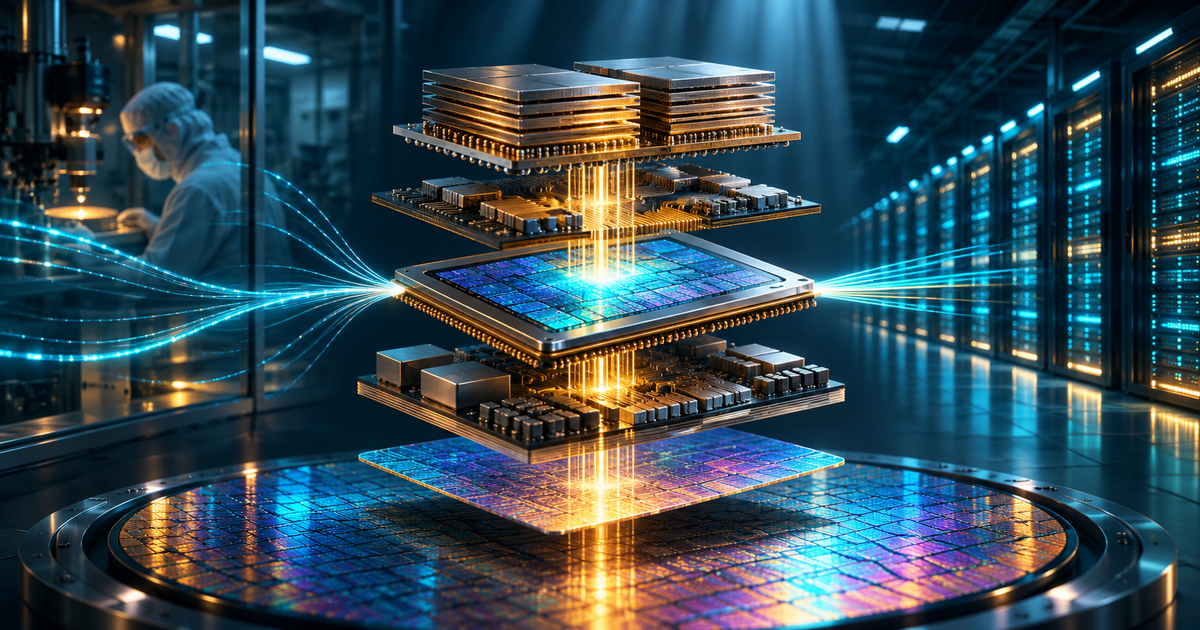
The “tollbooth” analogy is useful for mapping dependencies. It becomes misleading when it suggests every supplier receives a royalty on every AI calculation, or that all suppliers enjoy the same protection from competition.
Lithography and fabrication create upstream constraints
ASML (ASML) supplies EUV lithography systems used to pattern advanced chips. Its 2025 annual report identifies it as the only manufacturer of EUV systems. That position does not make all semiconductor equipment an ASML monopoly: chipmaking also requires deposition, etching, inspection and other processes.
Taiwan Semiconductor Manufacturing (TSM) occupies the fabrication layer. Its customers design processors; TSMC manufactures them and provides advanced packaging services. In its November 10 revenue filing, the company reported October sales of NT$586.89 billion, up 59.7% year over year. Those are company-wide sales, not a measure of AI revenue alone.
For investors, fab capacity and packaging availability matter alongside demand. Orders are more valuable when factories can deliver efficiently; expanding capacity also consumes cash before the associated revenue arrives.
Compute demand splits across different architectures
Nvidia (NVDA) supplies merchant accelerators and the surrounding computing platform. Its fiscal third-quarter release reported revenue of $115.8 billion for the quarter ended October 25, up 103% from a year earlier. Fourth-quarter revenue guidance of $130 billion, plus or minus 3%, is management's forecast, not a completed result; that quarter also includes an additional week.
Advanced Micro Devices (AMD) competes through its Instinct GPUs and ROCm software. Its opportunity depends on customers adopting the hardware and software together. Processor specifications alone cannot establish a customer's total deployment cost or a supplier's future market share.
The distinction matters: merchant GPUs serve many customers, while purpose-built chips can target narrower workloads. Growth in one architecture need not translate into identical growth for every processor supplier.
Networking and memory complete the system
Broadcom (AVGO) participates in custom accelerators and cluster connectivity. Its annual filing describes custom XPUs, Ethernet switching, network interfaces and optical components. These products address different bottlenecks; they should not be treated as a single interchangeable chip business.
Micron Technology (MU) supplies high-bandwidth memory, which stacks memory to provide the bandwidth needed by demanding accelerators. Micron is one participant in a competitive memory market. HBM exposure does not eliminate memory pricing cycles, manufacturing challenges or customer qualification requirements.
The practical lesson is to examine whole-system economics: useful output per dollar, power consumption, network utilization and memory capacity. A faster processor has limited economic value if the rest of the installation cannot support it.
What could change the view
More efficient models, slower customer spending, export restrictions or power constraints could weaken orders. Supplier competition and customer concentration can also erode pricing power even while aggregate computing demand grows.
Valuation remains a separate question. Revenue growth alone cannot establish that a stock is inexpensive; comparing earnings multiples requires a dated price and a clearly identified earnings estimate. The same discipline applies to cash flow after expansion spending.
Bottom line
These five layers provide a useful map of AI hardware exposure, not a guarantee that six stocks will outperform. The next research check is whether reported deliveries, margins and cash generation keep pace with spending plans. Compare the businesses through the ranked stock screener and industry research while keeping their distinct risks in view.