
Three things to know
- Tectonic Therapeutic is a Bull Portfolio selection for short-term growth after a 4.35% completed-week advance.
- The latest verified trade available for this review was Friday’s $20.64 close, up 6.28% that session; no fresh November 9 trade was verified.
- The main APEX trial readout is expected by the end of January 2027, which makes this week’s setup different from an imminent clinical-results trade.
Tectonic Therapeutic combines an active clinical development program with a share-price recovery that is beginning to attract attention. A positive completed week and a low position within its annual closing range make it a focused opportunity to examine alongside the company’s development milestones.
The public Bull Portfolio includes TECX because the November 6 screening identified short-term growth potential in its recent returns, price location, EPS comparison and trading activity. The APEX program gives investors a concrete development path to follow, with its main readout expected by the end of January 2027. The portfolio’s near-term selection and that longer clinical timetable provide distinct checkpoints for tracking progress.
The business is still a development proposition
Tectonic develops therapeutic proteins and antibodies. Unlike a mature medicine supplier, its investment case is primarily about whether clinical programs can progress successfully and create valuable treatment options. Investors are funding work whose commercial outcome remains uncertain, rather than buying a demonstrated stream of product profits.
The November 5 update set several distinct clocks. APEX Phase 2 results for TX45 in pulmonary hypertension associated with heart failure with preserved ejection fraction are anticipated by the end of January 2027. The ALPINE Phase 2a study in pulmonary hypertension associated with interstitial lung disease dosed its first patient in October, with interim results expected in the second half of 2027. Third-quarter company update
These are planned milestones, not successful outcomes. Initiating treatment in a study is a development step; it is not evidence that the medicine works in the target population. The distinction is especially important when a near-term stock thesis depends on improving expectations ahead of a much later readout.
A recovery below the 50-day average
Friday’s close was 15.01% of the way through the platform’s annual closing range of $17.58–$37.93. That low position helped the portfolio screen identify recovery potential, but it also records how far confidence has retreated. A return toward an earlier high is one possible outcome, not the default expectation.
The stock gained 4.35% over the latest five sessions, yet remained down 9.27% over one month. Its $20.64 close was 15.01% below the $24.29 50-session average. The similarity between those two percentages is coincidental: annual-range position and moving-average distance measure different things.
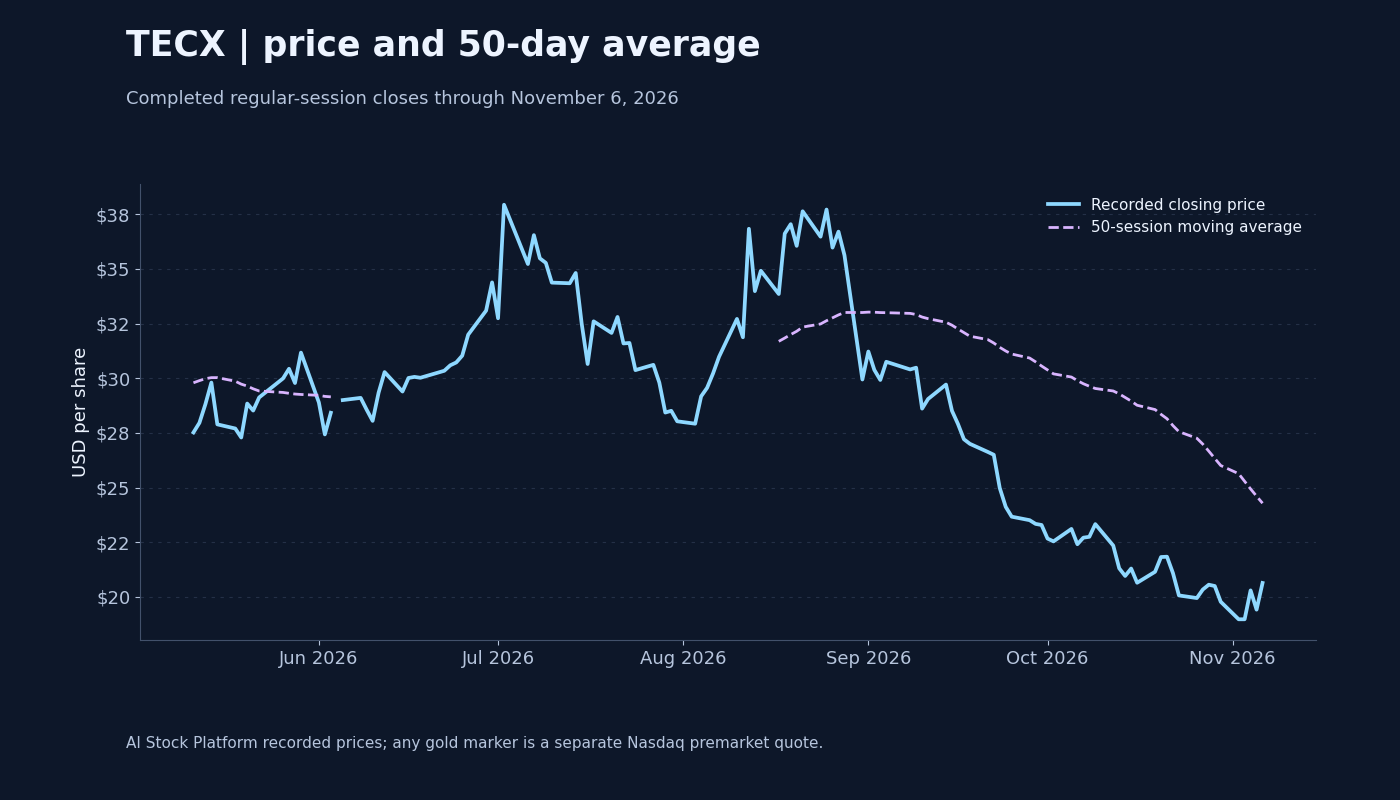
The latest five-session average volume was 1.11 times the preceding, non-overlapping 20-session average. That met the relaxed participation condition, but the margin above ordinary activity was modest. An advance that continues with broader participation would be more persuasive than a few isolated trades around news.
For next week, holding the recovery above recent closing lows matters before a full return to the moving average. Treating the average as an immediate price target would ignore the size of the remaining gap and the possibility of reversals along the way. Neither the chart nor the portfolio screen measures the probability of a successful trial.
The financial runway needs context
The latest stored normalized EPS comparison improved from negative $1.34 in Q1 2026 to negative $1.18 in Q2. Losses narrowed on that per-share series, but the business did not become profitable. The preceding observations, negative $1.02 and negative $1.03, also show why one improving comparison is insufficient to describe a durable earnings trend.
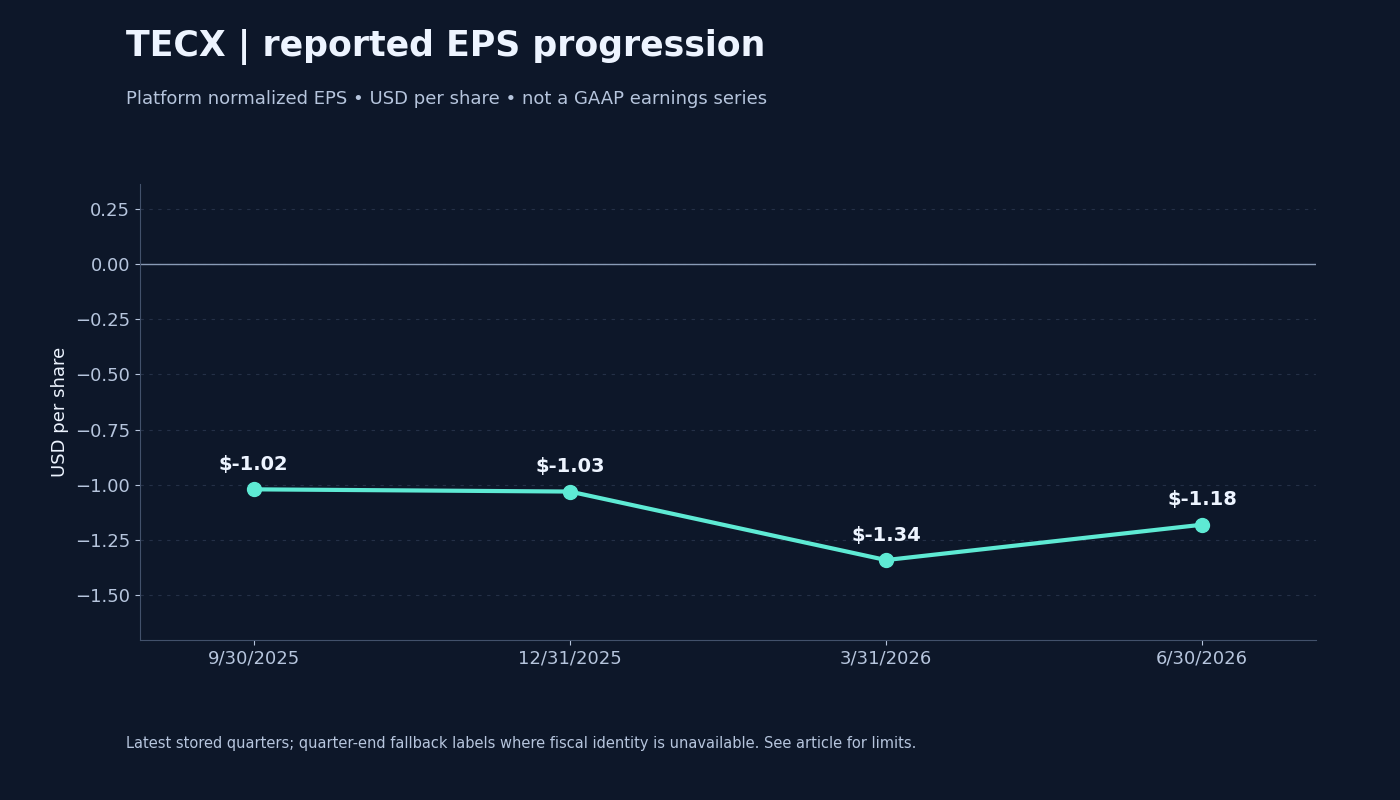
The chart stops at the latest compatible stored EPS observation. It is not presented as if the new third-quarter announcement had already been incorporated. A compatible four-quarter revenue, earnings and margin series was unavailable, so no synthetic financial bars or zero-filled margins are shown.
The newer issuer update reported September 30 cash and cash equivalents of $234.7 million, including approximately $22.3 million of third-quarter net equity proceeds, and estimated runway into Q1 2029. It also reported a $21.3 million quarterly net loss. A larger cash balance can therefore reflect financing rather than profitable operations. The runway remains management’s planning estimate. November financial update
What the platform ratings are saying
Price Score rose from 3.48 to 4.20 out of five, while Momentum declined to 47.75 out of 100 and AI Score stood at 2.15 out of five. That disagreement is informative. The reversal-oriented score can favor a depressed price with an improving week, even when the broader momentum measure has not strengthened.
Assembly Biosciences and Tyra Biosciences are useful fellow Bull Portfolio clinical-stage comparisons. Their programs address different diseases, so their trial results cannot predict TX45’s outcome. The relevant comparison is financial and practical: cash use, financing needs, milestone timing and the amount of price confirmation accompanying each story.
The evidence that would change the case
The supportive factors are a positive completed week and a funded development plan with a defined next major readout. The main inhibitors are persistent losses, possible dilution and the risk that clinical results disappoint or arrive later than expected. A low-range share price does not offset those risks by itself.
The short-term assessment is a tentative recovery watch. Holding recent gains while participation improves would strengthen the Bull Portfolio rationale; renewed closing lows would undermine it. January’s trial outcome remains a separate, larger question that this week’s trading cannot resolve.